

“Send Me a Pix”: How Brazil’s Love of Conversation Rewired Its Economy
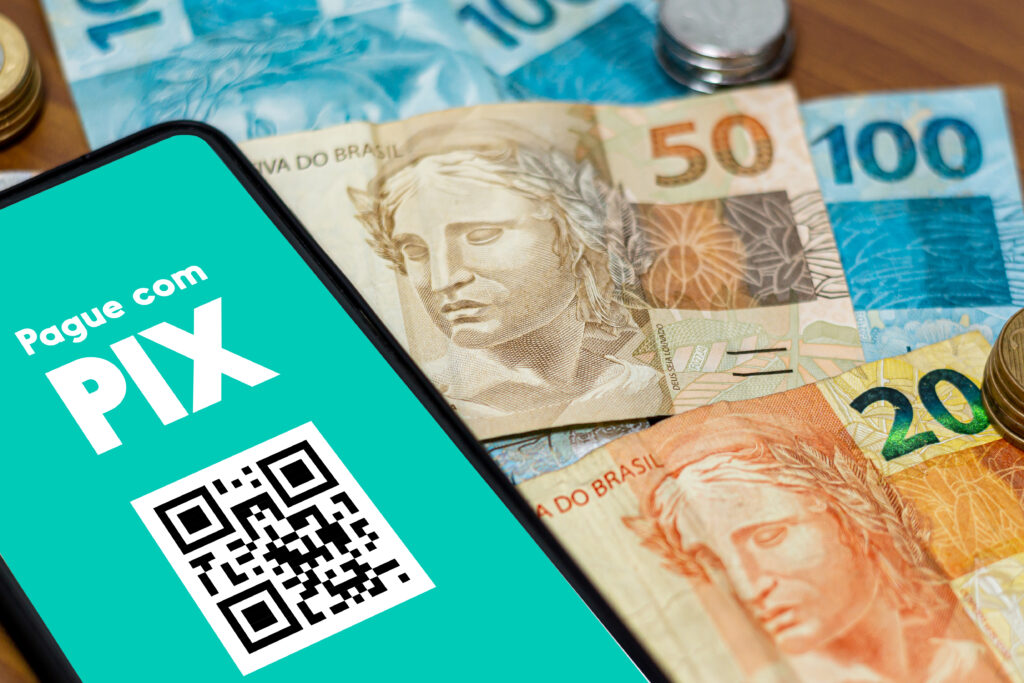
On November 16, Pix turns six. For readers outside Brazil the name may mean little, but here it became part of everyday vocabulary a long time ago. People say me manda um Pix (“send me a Pix”) at the street market, at the dentist’s front desk, when splitting a bar tab with friends and when paying a supplier on a Friday afternoon. According to the Central Bank of Brazil, the system handled almost 80 billion transactions in 2025, moving more than R$35 trillion, and 148 million people, roughly 86% of the adult population, sent or received at least one payment through it.
I want to use this anniversary to talk about why those numbers happened here, and why the answer has as much to do with Brazilian culture as with engineering. For anyone in the United States or Europe considering a technology partner in Brazil, I think this is the most useful context we can offer: the habits of the people who use our software every day shape the way we build it.
A culture that lives in conversation
Brazilians are famously talkative, and the official statistics confirm the stereotype in an interesting way. The latest IBGE survey on internet use shows that 90.5% of Brazilians aged 10 or older, about 168.7 million people, went online in 2025, the first time the country crossed the 90% mark. When IBGE asked what they used the internet for, the most common answer was voice or video calls (95.3% of users), followed by messaging apps (90.2%).
In other words, Brazil goes online first of all to talk, and commerce followed that habit. Here, a wholesale order is often confirmed by message, a quote may arrive as an audio note, and payment is a code pasted into the same chat. Any technology that wants to succeed in this environment has to be instant, mobile, and comfortable with a certain informality. Pix fits that description so well that the Central Bank reports a median transaction of only R$36 in 2025, the kind of amount people used to pay in cash.
When the government ships product
There is a second cultural trait that surprises many foreign visitors: Brazilians have grown used to solving bureaucracy on their phones. The federal platform gov.br reached 175 million users in March 2026 and gives access to more than 4,600 federal digital services, plus around 8,700 offered by states and municipalities. Its digital signature service alone records about 1.1 million signatures a day. In December 2022 the platform had 136.5 million users, so the growth in a little over three years was close to 28%.
IBGE data points in the same direction. The share of internet users who accessed a public service online rose from 38.6% in 2024 to 41.1% in 2025. For a software company, this changes the baseline of what users accept. A Brazilian customer who signs a legal document and pays a tax bill from the same phone in five minutes will not be patient with a B2B portal that asks for a fax, a printed form or three business days to confirm a payment.
From friends to companies
Pix started as a way for people to send money to each other, and in its first year person-to-person transfers made up the vast majority of the volume. The Central Bank’s management report on Pix, published in August 2026, shows how much that changed: payments from individuals to businesses reached 43% of all transactions in 2025, up from 6% in 2020. The Central Bank itself describes this shift as Pix becoming central to the functioning of Brazilian retail.
The agenda kept moving after that. Since January 2026, every financial institution that already offered interbank automatic debit has been required to offer Pix Automático, which handles recurring payments such as school fees, utilities and subscriptions. Since April 2026, contactless Pix has been mandatory for every institution in the system, and on October 1 the Central Bank removed the standard R$500 limit for contactless payments. On its busiest day so far, December 5, 2025, the system processed about 313 million transactions.
What this means if you build with Brazilians
The optimistic reading, and I believe it is the accurate one, is that Brazilian development teams have spent the last six years building for one of the most demanding payment environments in the world. They integrate real-time payments into online stores, connect those payments to ERP systems that have to reconcile every cent on the same day, and design for millions of users who expect everything to work on a mid-range smartphone. That experience is transferable. A team that has learned to handle peak days at this scale, under strict rules against fraud, brings that discipline to any project, wherever the customer is.
The picture is not perfect, and it would be dishonest to pretend otherwise. IBGE still counts about 4 million households without internet access, and the Central Bank has spent much of the past two years tightening its anti-fraud rules, because a payment system this popular also attracts criminals. But even these challenges have produced expertise: Brazilian engineers deal with security, identity checks and dispute mechanisms as part of their daily work.
At iZap we have been building complex websites, B2B and B2B2C e-commerce and custom systems since 2008, from our hubs in Belo Horizonte and São Paulo. Most of the projects we are proud of involve exactly what this edition describes: financial transactions, ERP integrations and customers who want things to happen now. Pix did not create that culture. It simply gave the rest of the world a measurable way to see it.
So here is my question for this month. If your customers in Europe or the United States started expecting the Brazilian standard of instant payment and conversational buying, how long would it take your platform to catch up?
Sources
- Banco Central do Brasil, Relatório de Gestão do Pix 2023-2025 (August 2026): https://www.bcb.gov.br/content/estabilidadefinanceira/pix/relatorio_de_gestao_pix/relatorio_gestao_pix_2026.pdf
- IBGE, PNAD Contínua TIC 2025, “Proporção de usuários da internet no país ultrapassou 90% da população de 10 anos ou mais” (July 2, 2026): https://agenciadenoticias.ibge.gov.br/agencia-noticias/2012-agencia-de-noticias/noticias/47408-proporcao-de-usuarios-da-internet-no-pais-ultrapassou-90-da-populacao-de-10-anos-ou-mais-em-2025
- IBGE, PNAD Contínua TIC 2025 summary: https://biblioteca.ibge.gov.br/visualizacao/livros/liv102290_informativo.pdf
- Agência Gov / Ministério da Gestão e da Inovação, “GOV.BR alcança a marca de 175 milhões de usuários” (March 24, 2026): https://agenciagov.ebc.com.br/noticias/202603/gov-br-alcanca-a-marca-de-175-milhoes-de-usuarios
- Banco Central do Brasil, Instrução Normativa BCB nº 746 (June 16, 2026), on Pix limits, in force since October 1, 2026
- Agência Brasil, Pix fifth anniversary coverage (November 16, 2025): https://agenciabrasil.ebc.com.br